
Untold key to violence in schools: responding to the Victorian Auditor-General's Office (VAGO)'s report on incidents involving violence in Victorian Government schools.
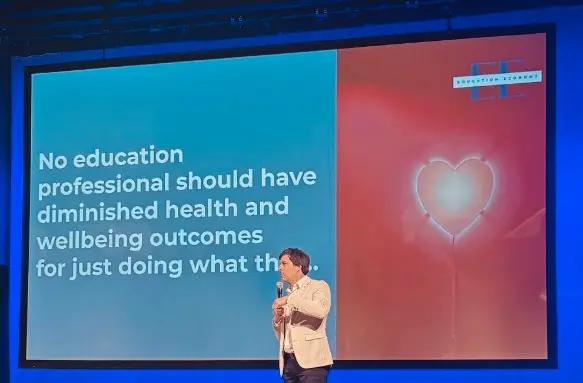
As a former Victorian deputy principal and education staffer, it’s disturbing to learn of the almost 12,000 occupational health and safety incidents involving student violence in 2023-24, based on reporting by the Victorian Auditor-General’s Office.
These involved “behaviours ranging from verbal abuse to physical assaults” and VAGO says the number of reported incidents has risen dramatically over the past 10 years.
The nearly 80,000 public school staff in this state have a right to feel and be safe at work every day. It’s a non-negotiable.
But before anyone starts finger-pointing or talking about “out of control” schools, it’s worth having a closer look at the VAGO report.
“Work-related violence resulting from student behaviour may not be driven by an intent to cause harm,” it says.
“There are many factors that could mean a student does not understand the consequences of their behaviour or be able to self-manage their behaviour.”
VAGO identified these as “disability or additional needs, age, trauma, mental health and other factors”. These complex issues are all too familiar for those working in schools and are among the key points I make in my new book, Disruption in Schools: Understand me before you mark me!
We need to acknowledge that there is a lot going on developmentally with children.
VAGO’s report is a stark reminder that we must apply a trauma-aware and neuroscience-informed approach as a way to reduce behaviours of concern.
Prevention is better than cure.
A Behaviour Response Checklist is among the most effective strategies I’ve used in schools to successfully reduce disruptive incidents. Teachers can use this tool to identify possible triggers for disruptive behaviour in students, and de-escalate situations in real time.
This should not be seen as imposing more work on teachers – rather it is a practical strategy informed by a framework that ensures the smoother running of classes and more effective learning. School leaders I partner with also prioritise fostering a sense of “belonging” for both staff and students.
There’s plenty of research showing students who feel they “belong” at school have improved mental and physical health, academic success and workplace engagement when they’re adults.
And that’s exactly what we want from our public schools.
By Ben Sacco
The Source: The Herald Sun